As cloud technology rapidly advances, robust cloud security becomes crucial for protecting valuable assets from cyber threats. It is estimated that the global market for cloud environments will reach around $145 billion by 2026. This growth underscores the need for security protocols that can safeguard sensitive information and ensure business continuity.
Find out why cloud security is so essential for your business and how these security protocols can protect your digital assets from a variety of threats in the following article.
What is Cloud Security?
Cloud security is a set of policies, technologies, applications, and controls utilized to protect virtualized IP, data, applications, services, and the associated infrastructure of cloud computing. Cloud security is a crucial aspect of IT for businesses of all sizes and industries, designed to protect data integrity, accessibility, and privacy while providing a scalable and reliable infrastructure for applications and systems.
Essentially, cloud security is about creating a secure environment for running applications and storing data in cloud computing environments. It involves securing the cloud against unauthorized access, data breaches, and other potential vulnerabilities that could affect the cloud-hosted systems.
Also read: Cek Alasan Pentingnya Cloud Security untuk Cegah Cyberattack
How Does Cloud Security Work?
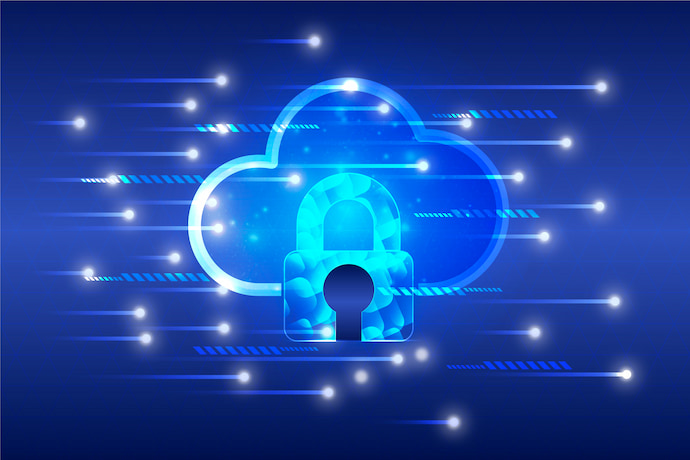
Cloud security functions through a layered approach that includes physical, technical, and administrative controls. Here’s a step-by-step breakdown of how it typically works.
Data Encryption
Encrypts data at rest and in transit, ensuring that sensitive information is unreadable to unauthorized users.
Identity and Access Management (IAM)
Controls who can access information and what resources they can use within the cloud environment.
Threat Detection and Management
Employs advanced monitoring systems to detect and respond to threats in real time.
Security Policies and Compliance Controls
Implements security policies and ensures compliance with regulatory requirements to protect data and privacy.
Conclusively, these steps are crucial in forming a protective shield around cloud data and applications, ensuring they are safeguarded against both internal and external threats.
The 6 Pillars of Robust Cloud Security
Robust cloud security is built on six fundamental pillars that ensure comprehensive protection.
Granular IAM Controls
Manages detailed access rights and privileges to ensure only authorized entities have entry to specific data sets.
Zero-Trust Network Access
Applies strict identity verification for every person and device trying to access resources on the cloud, regardless of their location.
Secure Configuration Management
Regularly audits configurations and settings to prevent security misconfigurations.
Advanced Data Encryption Techniques
Utilizes strong encryption protocols to protect data at rest and in transit.
Continuous Threat Detection and Response
Monitors cloud environments in real-time to detect and respond to threats swiftly.
Comprehensive Compliance Governance
Ensures all cloud operations adhere to industry standards and regulations.
Cloud Security vs. Traditional Network Security
It is crucial to understand that cloud security and traditional network security differ fundamentally in their approach and implementation.
| Aspect | Cloud Security | Traditional Network Security |
| Coverage | Extends globally, protecting data wherever it is accessed. | Concentrated within the physical premises of the organization. |
| Scalability | Can be easily scaled up or down based on demand. | Requires physical upgrades to scale. |
| Control | Managed by both providers and users depending on the cloud model. | Typically controlled entirely internally |
Pros and Cons of Cloud Security
While cloud security offers several drawbacks, it also comes with its challenges. Understanding these can help organizations make informed decisions about their security strategies.
| Pros | Cons |
| High scalability and flexibility | Dependence on the reliability of the cloud provider |
| Cost-effectiveness over time | Potential data privacy issues |
| Efficient disaster recovery | Risks associated with shared resources |
7 Benefits of Cloud Security
Cloud security provides numerous benefits that are vital for any modern business operating online.
Enhanced Security
Utilizes advanced technologies and protocols to protect data against cyber threats and unauthorized access, ensuring data integrity and confidentiality.
Regulatory Compliance
Helps organizations adhere to strict regulatory and compliance standards necessary for protecting sensitive data and avoiding legal penalties.
Cost Efficiency
Significantly reduces the costs associated with purchasing, managing, and maintaining physical hardware and dedicated facilities.
Scalability
Offers flexibility to scale IT resources up or down based on demand, ensuring efficient use of resources and cost savings.
Operational Flexibility
Enables businesses to deploy or update security measures rapidly and flexibly across global and remote environments.
Robust Disaster Recovery
Strengthens disaster recovery plans by providing quick data recovery options following cyber incidents or technical failures.
Simplified Management
Streamlines the management of security policies, monitoring, and response through centralized control platforms, reducing administrative overhead.
Common Cloud Security Challenges
Cloud security, while facilitating easier security management and enhancing visibility, still poses significant challenges that highlight the importance of choosing the right partner for cloud security solutions.
Identity and Access Control
With cloud providers continually adding more services, the number of distinct entitlements for these services often exceeds 5,000 users. Managing such a vast array of entitlements can be daunting with traditional identity and access management (IAM) methods, which may not scale effectively.
Logging, Monitoring, and Incident Response
Effective incident response is heavily reliant on comprehensive and accurate logs. Many existing solutions struggle to handle the sheer volume of data produced by cloud computing and fail to collect complete logs consistently.
Storage and Encryption
Queueing and notification services frequently handle sensitive information before security measures are fully applied. The critical nature of this data is often underestimated, with many services lacking adequate server-side encryption.
Cloud Ransomware
Cloud environments remain susceptible to cyberattacks. Attackers commonly exploit misconfigurations or poor security practices, such as excessive permissions, inadequate policy controls, or weak passwords, to breach cloud systems.
Supply Chain Attacks in the Cloud
Sharing data and access with third parties like suppliers and contractors increases the risk of supply chain attacks. Therefore, monitoring and managing third-party access becomes a crucial priority for security teams.
How is Cloud Security Evolving?
Cloud security is rapidly evolving to meet the intricate demands of modern business environments, driven by technological advancements and emerging threats. Here’s an overview of the key innovations shaping the future of cloud security.
Zero Trust Architectures
Moving beyond traditional perimeter-based defenses, Zero Trust architectures require continuous verification of all entities within the network, fundamentally altering access controls and minimizing internal threats.
Advanced Encryption Techniques
Techniques like homomorphic encryption allow data to be processed while still encrypted, enhancing security during data analysis without compromising privacy.
AI-Driven Security Analytics
AI and machine learning are increasingly used to detect and respond to threats more efficiently. AI systems analyze security data to identify and predict potential breaches, automating responses to enhance protection.
SIEM and SOAR Enhancements
Integration of Security Information and Event Management (SIEM) and Security Orchestration, Automation, and Response (SOAR) technologies improves threat detection and management. These platforms provide comprehensive monitoring and automated responses, streamlining security operations.
Compliance Automation
New tools are automating compliance with stringent data protection laws, helping organizations continuously monitor and report their compliance status in real-time.
Security for Serverless and Container Environments
As serverless computing and containerization grow, security solutions are adapting to protect these dynamic and scalable environments. This includes managing security policies, securing APIs, and ensuring configurations are maintained securely throughout the development lifecycle.
3 Cloud Service Types
Cloud services are typically divided into three main categories based on the nature of the resources they provide.
Infrastructure as a Service (IaaS)
IaaS offers extensive computation, network, and storage capabilities, allowing businesses to purchase resources on-demand instead of investing in heavy physical infrastructures. This model provides flexibility in resource management and is cost-effective for scaling operations.
Platform as a Service (PaaS)
PaaS provides a framework for developers that helps streamline the coding, testing, and deployment of applications. This service simplifies web application development without the complexity of building and maintaining the underlying infrastructure and services.
Software as a Service (SaaS)
SaaS delivers software applications on a subscription basis over the Internet, freeing users from complex software and hardware management. SaaS applications are accessible from any internet-enabled device, providing flexibility and mobile readiness.
With the adoption of these cloud services, businesses can leverage state-of-the-art technology to enhance efficiency, agility, and scalability. If you are considering integrating cloud services into your business, Central Data Technology (CDT) provides a plethora of options tailored to meet diverse operational needs.
Read more: Developers, Here’s How to Choose the Right Cloud Computing Provider
Cloud Services Available at CDT
Central Data Technology (CDT) has forged strong partnerships with a technology alliance poised to deliver top-tier cloud solutions. This collaboration ensures that businesses can access a comprehensive range of cloud services, each designed to address specific challenges and drive efficiency.
Akamai
Akamai ensures superior performance and robust security for digital assets by optimizing and securing online content and business applications, helping to prevent disruptions, and speeding up web and mobile experiences.
Amazon Web Services (AWS)
Amazon Web Services (AWS) provides a scalable and flexible cloud infrastructure that supports a wide range of applications, from enterprise-scale applications to newer dynamic web applications, helping businesses scale resources up or down as needed.
Dynatrace
Dynatrace offers advanced application performance monitoring, providing real-time analytics for all kinds of IT Infrastructure which helps businesses optimize performance across complex environments, from software on-premises to cloud deployments.
F5
F5 specializes in application delivery networking and security, ensuring applications are fast, secure, and available. F5’s solutions protect sensitive data, manage network traffic efficiently, and deliver optimal user experiences.
Hitachi Vantara
Hitachi Vantara integrates IT and operational technology to create enhanced data solutions, driving innovation in various industries through comprehensive management of data lifecycle.
Zscaler
Zscaler provides comprehensive security solutions through its Zero Trust platform, focusing on securing user-to-application connections and preventing lateral movement by directly connecting users to resources, reducing risks, and enhancing cloud security.
Contact CDT for Your Cloud Security Needs
Implement cloud security with Central Data Technology (CDT) to ensure your data is protected. As an authorized advanced partner of various tech alliance in Indonesia, CDT ensures a smooth implementation process for cloud security. Consult your cloud security needs with our team in this link.
Author: Danurdhara Suluh Prasasta
Content Writer Intern CTI Group